

If you're wondering how to protect your hair while you sleep, the answer is surprisingly simple: reduce friction and keep your hair contained. That’s the core of it. All that tossing and turning at night can do a real number on your hair, leaving you with a tangled, frizzy mess by morning. But a few small tweaks to your nightly routine can turn those eight hours of rest into a restorative treatment for your hair.
The Hidden Damage in Your Nightly Routine
We tend to think of sleep as a totally passive activity, but for your hair, it can feel more like a nightly battle. Every time you shift your head, your hair grinds against your pillowcase. If you’re like most people and use a standard cotton pillowcase, you’re basically rubbing your hair against a rough, moisture-sucking surface all night long.
This constant friction is the enemy of healthy hair. It lifts the hair's cuticle—the protective outer layer of each strand. When that cuticle gets roughed up, your hair can't hold onto moisture effectively, which is what leads to common hair woes:
- Frizz and Flyaways: A raised cuticle doesn't lie flat, creating that frizzy, "unruly" texture we all hate.
- Breakage: Hair that's dry and weakened from this friction is far more likely to snap and develop split ends.
- Dullness: Healthy, smooth cuticles reflect light, giving hair its shine. Damaged cuticles look dull and lifeless.
Why Your Pillowcase Matters
The fabric you sleep on makes a massive difference. Cotton is a workhorse fabric, but it's also incredibly absorbent. It actively wicks precious moisture away from your hair, leaving it dry and brittle by the time your alarm goes off. This is where choosing the right material becomes a game-changer for your hair care.
A simple switch can make a world of difference. Your nightly routine isn't just about rest; it's a critical window for hair preservation and repair. When you start seeing it this way, bedtime becomes a powerful tool for reaching your hair goals.
To see the real-world impact, let’s quickly compare what happens to your hair with and without protection.
Nightly Hair Damage vs Protection At a Glance
| Factor | Without Protection (Cotton Pillowcase) | With Protection (Satin & Protective Styles) |
|---|---|---|
| Friction | High; hair cuticles are roughed up and lifted. | Minimal; hair glides smoothly over the surface. |
| Moisture | Moisture is absorbed from hair, leading to dryness. | Natural oils and moisture are retained in the hair. |
| Tangles | Frequent; hair moves freely, causing knots and tangles. | Reduced; hair is secured, preventing tangling. |
| Breakage | High risk; weakened, dry strands snap easily. | Low risk; hair integrity is preserved. |
| Morning Look | Frizzy, dull, and often requires significant restyling. | Smoother, shinier, and styles are better preserved. |
The difference is night and day. This infographic helps visualize just how much of an impact these choices have on friction and moisture.
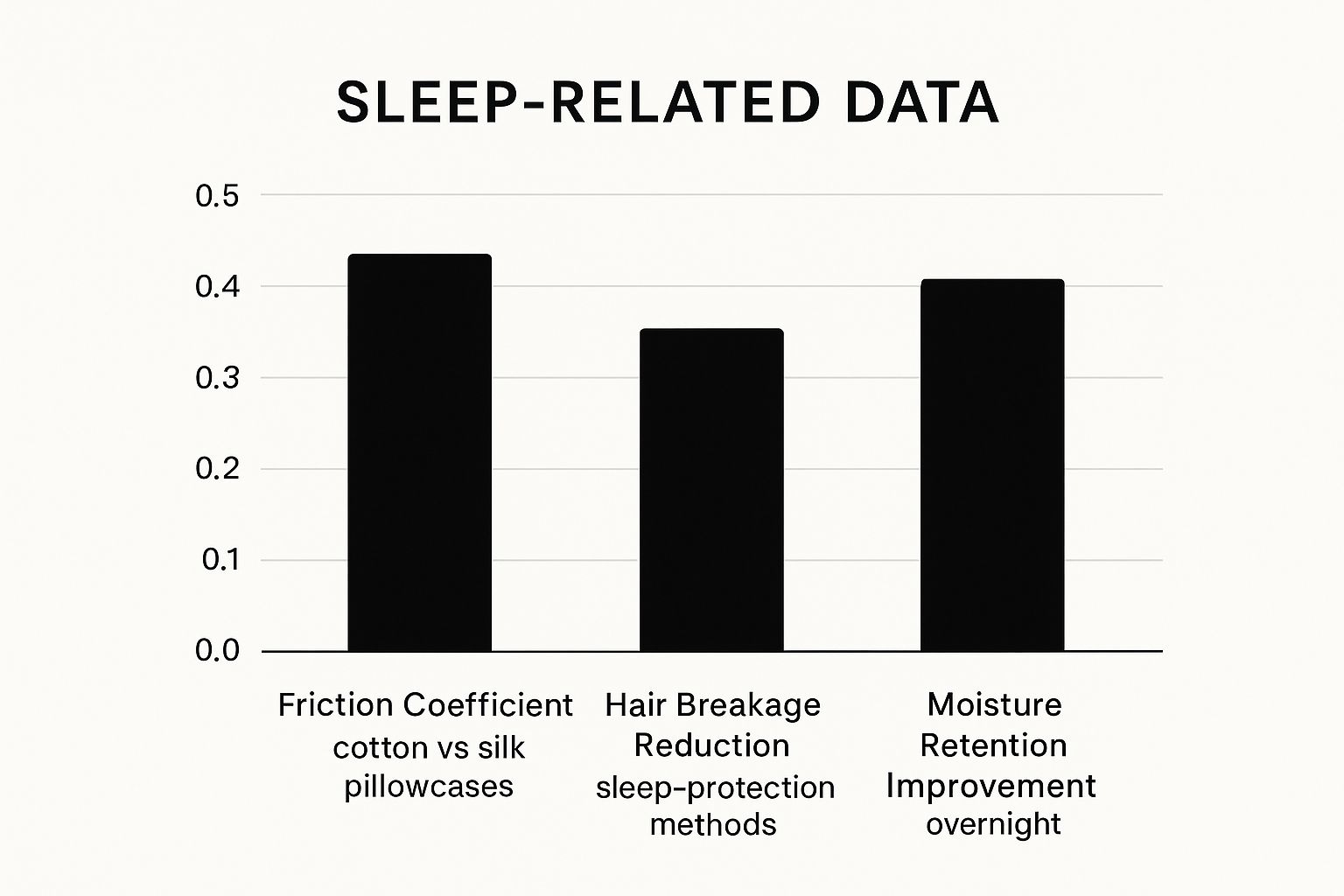
The proof is in the results. Research shows that the friction from traditional cotton pillowcases can be responsible for 20-30% more hair breakage. Making the switch to a material like satin or satin can slash this damaging friction by as much as 43-60%, helping your hair hold onto its natural oils and stay smooth. If you're curious, you can find more data on overnight hair care trends and see how popular these methods have become.
Choosing Your Best Sleep Surface and Accessories

Your first line of defense against nighttime hair damage isn’t a product you put in your hair—it’s the surface you sleep on. Making a simple switch away from traditional cotton pillowcases is one of the most powerful changes you can make. Cotton’s rough, absorbent texture acts like velcro on your hair, snagging the delicate cuticle and wicking away precious moisture. The result? Frizz, tangles, and breakage.
This is where smoother fabrics make all the difference. Both satin and satin provide a low-friction surface that lets your hair glide around as you toss and turn, rather than getting caught and pulled. This simple upgrade helps your hair hold onto its natural moisture and keeps the cuticle layer lying flat and smooth.
Pillowcase Materials Compared
So, silk or satin? The right choice really comes down to your budget and personal needs. They both get the job done, but each has its own unique qualities.
- Silk: As a natural protein fiber, satin is the definition of luxury. It's incredibly smooth, breathable, and even naturally hypoallergenic. The downside is its price tag and the delicate care it requires.
- Satin: Satin is a specific type of weave, not a fiber, which is what gives it that signature slick surface. It offers a feel that's very similar to silk but at a much more wallet-friendly price. It's also more durable and easier to wash, making it a fantastic, practical choice for everyday hair protection. A high-quality custom satin pillowcase, for instance, delivers incredible results without the high cost of pure silk.
- Cotton: While it feels cozy, standard cotton is the worst offender for hair health. Its texture is just too rough and moisture-absorbing to be a friend to your strands.
Key Takeaway: The main goal is to reduce friction. Silk and satin both accomplish this beautifully, but satin often emerges as the winner for its blend of affordability, durability, and effectiveness.
The Power of Bonnets and Scarves
For some hair types—especially curly, coily, or extremely fragile hair—a protective pillowcase alone might not be quite enough. This is where sleep bonnets and scarves step in to offer an even higher level of defense.
By tucking all your hair safely inside, you completely eliminate friction and do a much better job of preserving your hairstyle overnight. These aren't just niche accessories anymore; they've become essential wellness tools. Once primarily a staple in African American communities, satin and silk bonnets are now widely celebrated as a smart way to prevent hair damage. For the ultimate defense strategy, many people I know actually use both—a satin bonnet and a satin pillowcase.
2. Master Gentle Protective Hairstyles for Bedtime
What you do with your hair is just as important as what it rests on. The whole point of a protective hairstyle at night is to keep your strands from getting into a free-for-all on your pillowcase. Less movement means less friction, which is the main culprit behind those frustrating tangles and split ends.
The golden rule here is to be gentle. Seriously, this is not the time for a sleek, tight ponytail. Anything you do should be loose and comfortable—if it’s pulling on your scalp or feels tight, it’s doing more harm than good. Constant tension can lead to traction alopecia, a form of hair loss you definitely want to avoid. Always reach for soft hair ties, like satin scrunchies or those seamless spiral cords that don't snag or leave that tell-tale crease in the morning.
Finding Your Go-To Style
The "perfect" nighttime hairstyle really depends on your hair's length and texture. Your ideal style should feel comfortable, be quick to do before bed, and actually help your hair look good in the morning.
Here are a few tried-and-true options that work for so many people:
- The Loose Braid: A classic for a reason. A simple, loose three-strand braid is fantastic for anyone with straight, wavy, or just plain long hair. It keeps everything contained and prevents a tangled mess. Plus, you often wake up with soft, heatless waves as a bonus.
- Two-Strand Twists: If you have curly or coily hair, this is your best friend. Twisting sections of hair helps keep your curl clumps together, preserving definition and cutting down on frizz. Doing a few loose twists all over can also gently stretch your curls, which helps combat shrinkage.
- The High Bun or "Pineapple": This is a total game-changer for the curly community. You simply gather all of your hair into a very loose bun or ponytail right on top of your head. It looks a bit like a pineapple, hence the name! This technique keeps the bulk of your curls from getting crushed and flattened while you sleep.
A classic bun, like the one pictured below, can easily be adapted for sleep. Just make sure you position it high on your head and secure it loosely.

When you're putting your hair up for the night, using a soft scrunchie instead of a tight elastic is key to preventing the tension and breakage we're trying to avoid in the first place.
Pro Tip: Want to take your protection to the next level? Combine your hairstyle with an accessory. After braiding or twisting your hair, tuck it all into a bonnet. This gives you double the defense, locking in moisture and shielding your hair completely from friction. A high-quality double-layer satin bonnet with a tie band is amazing for making sure your style stays put all night long.
Using Overnight Treatments for Deeper Hair Repair

Think of your sleep time as a golden opportunity for your hair. For 8 uninterrupted hours, your hair can finally soak in some serious TLC without fighting off sun, pollution, or your flat iron. This is where you can go beyond just preventing breakage and actually start repairing your hair from the inside out.
Applying an overnight treatment turns your rest into an intensive repair session. These products are specifically formulated for long-wear absorption, giving them ample time to deliver nourishing ingredients deep into the hair shaft. It’s one of my favorite secrets for waking up with hair that doesn't just look good, but feels fundamentally healthier and stronger.
Choosing the Right Overnight Product
Finding the right treatment is everything. I’ve seen clients with fine hair use a heavy mask and wake up with a greasy mess, while others with thick, coarse hair use a light mist that does next to nothing. The key is to match the formula to what your hair truly needs.
Here’s a quick breakdown based on my experience:
- For Fine or Dry Hair: Look for lightweight serums or leave-in conditioners. Anything with ingredients like hyaluronic acid is fantastic because it hydrates deeply without weighing your hair down.
- For Thick or Damaged Hair: This is where you can bring in the heavy hitters. Richer hair oils (argan and jojoba are classics for a reason) or creamy hair masks have the power to soften and mend those rougher hair cuticles.
- For All Hair Types: If you're just starting out, a good all-around leave-in spray can provide a nice baseline of moisture and frizz control for just about anyone.
The demand for these nighttime heroes is no joke. The overnight hair treatment market, valued at roughly $84.45 billion recently, is exploding because people are realizing that prevention and deep care pay off. It’s a shift toward non-greasy, effective formulas that work while you sleep. You can discover more about the overnight hair treatment market to see the trends driving this growth.
Best Practices for Application
How you apply the product makes all the difference, especially if you want to keep your pillowcases pristine. My rule of thumb is to start small—a dime-sized amount is usually enough. You can always add more if needed.
Concentrate the treatment on the mid-lengths and ends of your hair. This area is the oldest and most susceptible to damage, so it needs the most attention. Avoid the roots to prevent weighing your hair down.
Once the product is in, tucking your hair into a silk or satin bonnet is a game-changer. It not only protects your bedding but also uses your natural body heat to help the treatment penetrate even more deeply. To really upgrade your beauty sleep, pairing your hair protection with a gentle eye mask is a great final touch. This satin sleep mask is a perfect example of how to complete your nightly routine.
Nightly Hair Care Mistakes That Cause Damage
Sometimes, the secret to protecting your hair while you sleep isn't about what you do, but what you stop doing. You can have the best satin pillowcase and the perfect protective hairstyle, but a few common mistakes can completely undermine your efforts.
Let's break down the habits that might be secretly sabotaging your hair health overnight.
Going to Bed with Wet Hair
This is one of the biggest mistakes I see people make. When your hair is wet, it's in its most fragile state. The protein bonds are weaker, making each strand incredibly elastic and prone to stretching past its breaking point as you toss and turn.
That constant friction against your pillow doesn't just cause breakage and split ends. A damp, warm scalp is also a breeding ground for fungus and bacteria, which can lead to dandruff, itchiness, and other scalp issues you definitely don't want to deal with.
Re-Evaluating Your Bedtime Habits
Beyond sopping wet hair, a few other habits can cause a surprising amount of damage.
Think about how you brush your hair before bed. If you're aggressively yanking a brush through it, you're causing serious mechanical stress. Instead, try gently detangling with your fingers first, then use a wide-tooth comb to work through any remaining knots from the bottom up. It’s a much kinder approach.
The type of hair tie you use also matters—a lot. Those standard elastic ties with the little metal clamp? They’re notorious for snagging, pulling, and literally ripping out strands of hair. Make the switch to something gentler, like soft satin scrunchies or spiral hair cords that hold your hair in place without the damaging grip.
Key Insight: A truly protective nighttime routine isn't just about adding steps; it's about auditing your current habits and eliminating the ones that are actively causing harm.
Another common pitfall is getting too heavy-handed with products. While I love a good overnight treatment, slathering on thick oils or creams can easily weigh your hair down, clog your follicles, and leave you with greasy, built-up roots by morning. Apply products sparingly and concentrate them on the mid-lengths and ends, where your hair is oldest and needs the most TLC.
If you’re a night-shower person, getting your hair 100% dry is an absolute must. To do this without heat damage, a super-absorbent towel is your best friend. Something like a waffle hair drying towel can drastically cut down your drying time by wicking away moisture much more effectively than a standard bath towel. This one simple swap can set your hair up for a much safer, healthier night's sleep.
Got Questions About Protecting Your Hair at Night?
Once you start dialing in your nighttime hair routine, you’ll probably have a few questions pop up. It's those little details that really make the difference, helping you figure out how to protect your hair in a way that actually works for you.
Let's dive into some of the most common things people ask.
Satin Pillowcase vs. Bonnet: What's the Real Difference?
This comes up all the time, and honestly, the best choice really boils down to your main goal.
A satin pillowcase is a fantastic, low-effort upgrade for literally everyone. It minimizes the friction that causes frizz and breakage, plus it helps both your hair and skin hold onto precious moisture. Think of it as your first line of defense.
A bonnet, however, is all about total hair containment. This is where it really shines for anyone trying to preserve a specific hairstyle—we're talking curls, waves, or braids that you want to look fresh the next day. It’s also a lifesaver for those with very long or fragile hair that tangles easily.
For the ultimate protection? Do both. Use a bonnet to keep your style locked in, with a satin pillowcase as your trusty backup in case it slips off.
Is It Really That Bad to Sleep with Wet Hair in a Protective Style?
In a word, yes. It's a habit you really want to avoid. Your hair is at its absolute most fragile and vulnerable when wet, making it incredibly prone to stretching and snapping, no matter how loosely it's tied. On top of that, a damp scalp can become a breeding ground for fungus or cause irritation.
If you're in a pinch and have no other choice, wait until your hair is at least 80% dry. Then, put it into a single, very loose braid to give it some room to breathe and finish drying overnight.
How Often Should I Be Using an Overnight Treatment?
The best advice here is to simply listen to your hair. It will tell you what it needs.
For lightweight leave-in serums and mists, you might find that applying them every couple of nights is the sweet spot.
When it comes to the heavier hitters—like rich oils or deep conditioning masks—once or twice a week is typically more than enough for most people. If you wake up and your hair feels greasy or weighed down, you know it's time to scale back. But if it still feels dry and thirsty, you can try increasing how often you use it.
Exploring a range of hair protection options for sleep can also help you find the perfect accessories to complement your overnight treatments.
At NuAira Co, we're firm believers that a great hair day truly starts the night before. Our premium satin bonnets, pillowcases, and accessories are designed to give your hair the ultimate protection, so you can wake up to smoother, healthier, and more beautiful hair. Explore our full collection and transform your nightly routine at https://nuairaco.com.
Article created using Outrank
0 comments